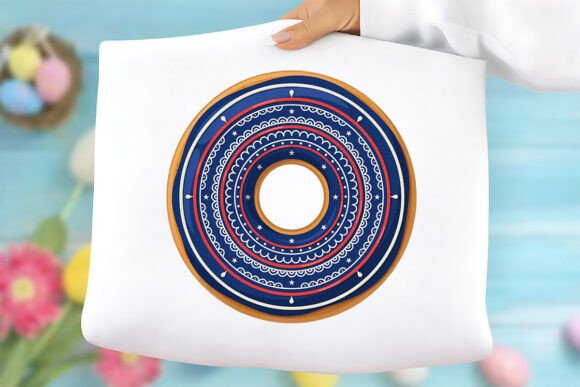
Patriotic Mandala Donut PNG
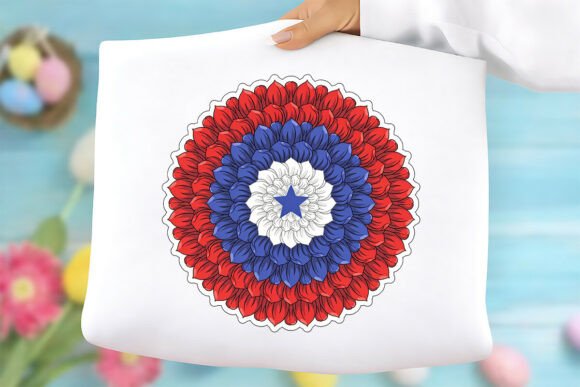
At first glance, the Patriotic Mandala Donut PNG might seem like a playful juxtaposition—two distinct visual languages merging into one: the intricate symmetry of mandala art and the bold, celebratory symbolism of American patriotism. But look closer, and it reflects something deeper: a growing cultural shift toward meaningful personalization in design. People no longer want generic clipart or mass-produced graphics. They seek visuals that carry intention—art that balances tradition with creativity, reverence with whimsy, and symbolism with scalability. This isn’t just decoration. It’s identity made visible.
Why This Design Resonates Now
Today’s creators—whether launching a small-batch apparel line, designing classroom materials for Independence Day, or producing limited-run event merch—are working under tighter timelines, smaller budgets, and higher expectations for authenticity. Stock assets often fall short: they’re overused, lack thematic cohesion, or fail to scale cleanly across formats. The Patriotic Mandala Donut PNG answers that need precisely. Its 300 DPI resolution ensures crisp reproduction on everything from 4” stickers to 18” wall decals. The transparent background eliminates tedious clipping or layering work. And because it’s delivered as a ready-to-use PNG file—not SVG, not layered PSD—the workflow stays frictionless. No software compatibility worries. No font licensing checks. Just download, place, and produce.
This aligns with how digital creation tools have evolved. Platforms like Canva, Cricut Design Space, and Printful now prioritize drag-and-drop compatibility with high-res raster files. Designers using Procreate or Affinity Photo appreciate clean transparency and pixel integrity at print sizes. Even educators building printable lesson kits benefit from immediate usability—no editing overhead, no learning curve. The trend isn’t toward more complex files; it’s toward *more reliable ones*.
More Than Aesthetic: Function Meets Intention
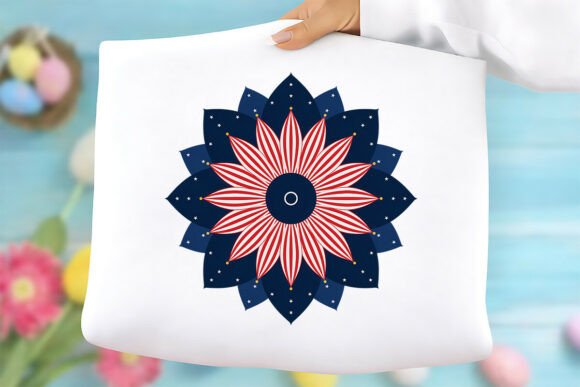
A mandala represents focus, balance, and cyclical renewal. Patriotic iconography—stars, stripes, red-white-and-blue palettes—carries shared cultural weight and emotional resonance. When fused thoughtfully, as in this design, the result feels both grounded and uplifting. It’s not ironic or tongue-in-cheek. It’s sincere, inclusive, and quietly sophisticated—qualities increasingly valued in commercial design, especially for products meant to be worn, displayed, or gifted.
Consider real-world applications: a local bakery offering Fourth of July donuts could use the graphic on packaging, social media banners, and window decals—all from the same file. A teacher preparing a civic education unit might print it on handouts or project it during a discussion about symbolism in American art. A freelance designer building a client’s holiday campaign can embed it seamlessly into mockups without worrying about vector conversion errors or color shifts. That versatility stems directly from its technical execution: 300 DPI resolution, true transparency, zero watermark, and intentional color calibration.
Commercial Use, Clear Boundaries
You’re allowed to use this Patriotic Mandala Donut PNG commercially—on physical goods like t-shirts, mugs, tote bags, enamel pins, and greeting cards—without additional licensing fees. That flexibility matters. Small business owners, Etsy sellers, and craft fair vendors need clarity, not legal ambiguity. Knowing upfront that you can apply it to merchandise—and retain full creative control over layout, sizing, and context—removes a common bottleneck in production planning.
What’s equally important is what’s not included—and why that matters. There are no SVG or editable vector files. That’s intentional. This isn’t a toolkit for logo redesign or scalable branding systems. It’s a finished, production-ready asset optimized for direct application. If your workflow depends on path editing or infinite scalability, this PNG won’t serve that need—and that’s okay. Recognizing its precise scope helps users avoid mismatched expectations. It also reinforces responsible digital ownership: the prohibition on reselling, sharing, or redistributing the file protects both the creator’s labor and the buyer’s investment in a unique, licensed asset.
Scalability Without Compromise
“Scalable to fit your project needs” isn’t marketing speak here—it’s measurable. At 300 DPI, the PNG maintains fidelity up to approximately 12” x 12” when printed. For larger formats (e.g., banners or yard signs), minor interpolation in professional software preserves legibility without visible pixelation—especially given the design’s balanced line weight and intentional negative space. Unlike low-res web graphics that blur or break apart when enlarged, this file holds structural integrity because resolution was prioritized over file size.
That attention to output quality reflects broader shifts in consumer expectations. Shoppers notice texture. They feel the difference between a sharp, well-registered print and a muddy one. Social media audiences scroll past indistinct thumbnails. A single high-fidelity asset does more heavy lifting than ten mediocre alternatives—reducing revision cycles, minimizing reprints, and strengthening brand consistency across touchpoints.
Design Ethics in Practice
The absence of watermarks isn’t just convenient—it’s ethical. Watermarked previews have their place in portfolio sites or marketplaces where licensing is still pending. But once purchased, users deserve unencumbered access. That trust builds long-term relationships between creators and buyers. It also supports fairness: if you’ve paid for commercial rights, you shouldn’t have to crop around branding or negotiate removal fees.
This principle extends to usage terms. The restriction on redistributing the file isn’t about control for control’s sake—it’s about preserving value in a crowded digital marketplace. When designers invest time in original illustration, thoughtful color theory, and culturally resonant composition, those efforts deserve protection. Responsible use means honoring that labor while still enabling broad, practical application.
Realistic Integration Tips
For best results, consider these straightforward practices:
- Test contrast early: Preview the PNG against your intended background (e.g., navy fabric or kraft paper) before finalizing placement—transparency works only if surrounding colors support legibility.
- Respect minimum size guidelines: For embroidery or fine-detail prints, keep the design above 2” wide to preserve mandala intricacy and star definition.
- Batch efficiently: Because it’s a single-layer PNG, you can import it into cutting machines (like Cricut or Silhouette) and cut multiple variations—mirror images, outlines only, or layered overlays—without reprocessing.
- Pair intentionally: Combine with complementary typography (e.g., clean sans-serifs for modern appeal or serif headers for traditional warmth), but avoid overcrowding—the mandala’s rhythm thrives with breathing room.
None of these steps require advanced skills. They simply reflect how thoughtful design interacts with real-world constraints: material behavior, production tolerances, audience perception, and platform requirements.
Looking Ahead—Without Overpromising
There’s no indication that demand for culturally grounded, production-ready digital art will slow. If anything, the bar for quality continues rising—not in complexity, but in intentionality. Buyers aren’t asking for “more features.” They’re asking for fewer compromises: resolution that holds up, transparency that works, licensing that’s clear, and design that feels considered—not algorithmically generated or trend-chasing.
The Patriotic Mandala Donut PNG doesn’t try to be everything. It excels at what it’s built for: delivering symbolic, scalable, print-ready art with zero friction. That focus—on solving a specific problem well—is what makes it useful today, and likely valuable in months or years ahead, regardless of shifting aesthetics or platform updates.
In a landscape saturated with disposable graphics, reliability has become its own kind of innovation.